Customer experience · Conversational AI
Facebot, AI with a human face
A persona customers talk to
The context
Facebot was built for customer-facing teams that answer the same questions all day: reception desks, storefronts, service counters, and the websites behind them. Deployments ran on public kiosks and embedded web pages, which set the constraints: walk-up users with no instructions, background noise, varied accents, and zero patience for a clunky interface. Each deployment carried its own domain knowledge, so the persona had to be retuned per business rather than shipped generic.
Why normal software was not enough
A form or an FAQ page assumes customers know what to ask and how the business words it. They do not. People ask in their own words, mid-thought, out loud. Scripted decision trees break on the first unexpected phrasing and cannot hold context across turns. A conversation that feels attended took speech recognition, a dialogue engine tuned to the domain, and a face and voice generated in sync: things rules alone cannot fake.
The problem
Text chatbots feel like forms. The brief was an AI customers would actually talk to: a face, a voice, a personality, and real domain knowledge, deployable on a website or a kiosk for customer-facing roles.
What we built
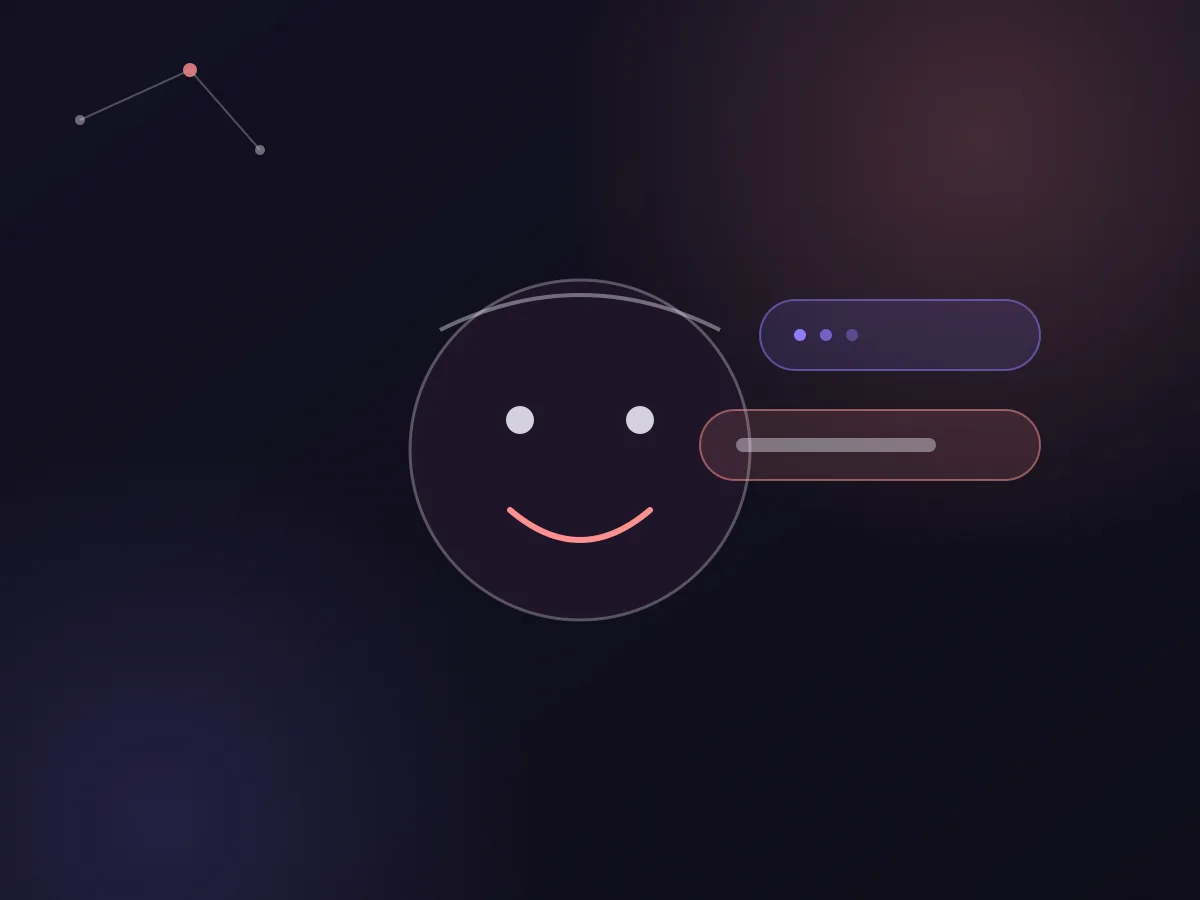
We combined an animated human face with speech recognition, a domain-tuned dialogue engine and expressive TTS, so conversations felt genuinely attended. The persona, we called her Adhira, answered domain questions, kept context across turns, and handed off gracefully when a human was the right answer.
What changed
- Routine customer queries answered conversationally without staff
- Domain knowledge tuned per deployment rather than generic answers
- Face, voice and personality measurably increased engagement over text chat
- Graceful human handoff when confidence dropped
What production made hard
- Speech recognition in public spaces: kiosks mean background noise, cross-talk and varied accents, plus the harder problem of telling a pause from the end of a sentence.
- Conversation-speed latency: a delay that reads as thinking in text chat reads as broken when a face is looking at you, so recognition, dialogue and speech had to stream, and the animated face had to stay in sync with the voice.
- Keeping the persona honest: Adhira had to answer only from the deployment's domain knowledge, admit what she did not know, and never improvise a policy or a price.
- Handoff without a dead end: detecting dropping confidence early and passing the conversation to a human with context, instead of looping the customer through rephrasings.
- Repeatable domain tuning: each deployment brought new vocabulary, products and tone, and retuning had to be a process, not a rebuild.
What a similar project needs
- The real questions, not the imagined ones: transcripts, tickets, call logs or front-desk FAQs, plus the approved answers. The persona is only as strong as the knowledge behind it.
- A timeline that ships a talking slice early: a working prototype in about scoped, then hardening for noise, accents, edge cases and handoff before anything faces the public.
- One team across speech, dialogue and interface, plus someone on the business side who owns the answers and the tone.
- A plan for what the persona must never say: prices, policies and promises need guardrails and a reviewed knowledge base, with a human handoff path from day one.
- Honest expectations on novelty: a face draws people in once; utility brings them back, so scope the persona around tasks it genuinely completes.
Have a problem in this shape?
Tell us what you are trying to win. We will map your version of this build in one call.